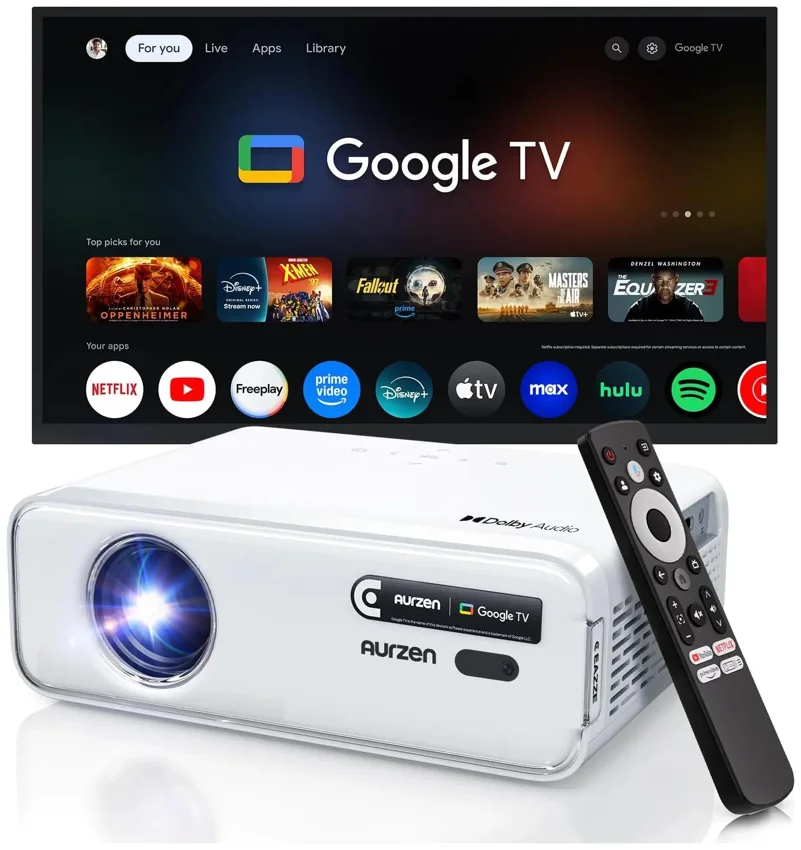
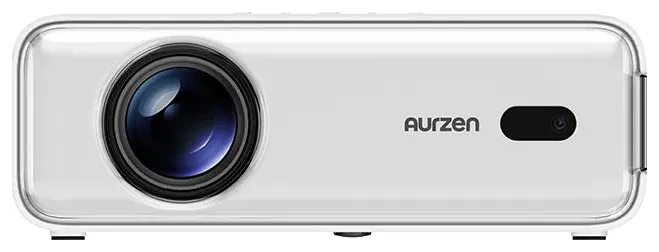
The EAZZE D1G puts Google TV, native 1080p projection and two 8 W speakers in a single unit. It makes sense if the people sharing your room already know the Google TV interface. Set it on a stable surface, connect to Wi-Fi for streaming and use its built-in focus controls to set the picture.
Display resolution: Native 1080p; HDR10 support
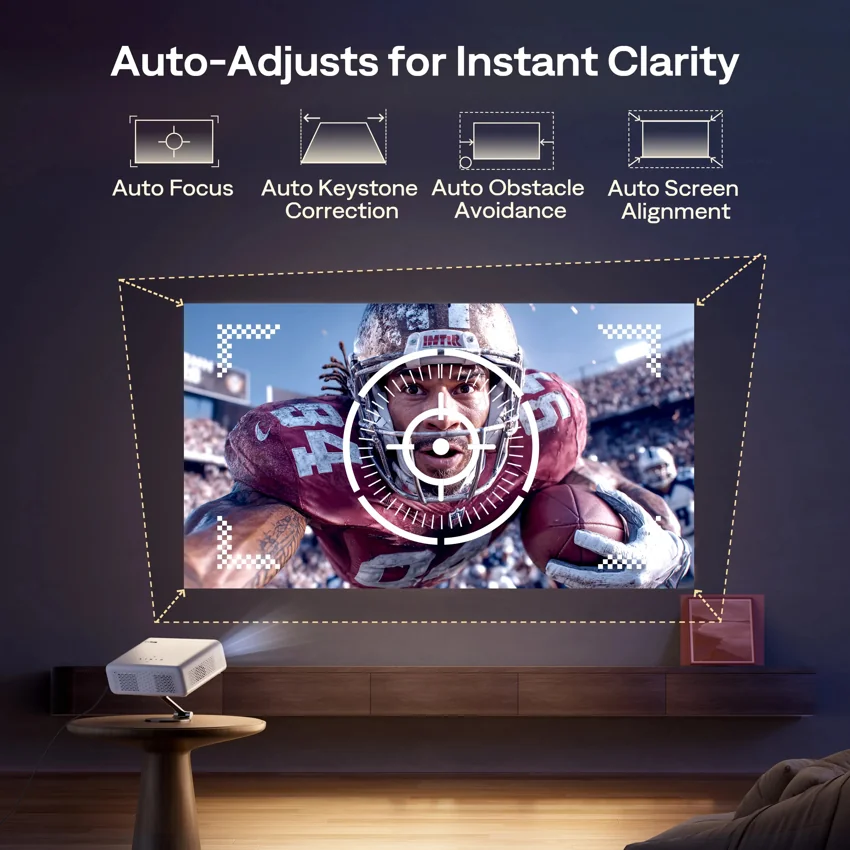
Placement and setup: Autofocus and automatic keystone correction
Built-in speakers: 2 × 8 W
Bluetooth: 5.1
Aurzen EAZZE D1G at a glance
Choose the D1G over the standard D1 if Google TV is the part you will use daily. Its interface brings apps and viewing profiles onto the projector, leaving the HDMI input available for a different source.
Aurzen EAZZE D1G buying considerations
Aurzen specifies 200 ANSI lumens for this model. If your only screen position faces a bright window, plan curtains or an evening viewing session before choosing your picture size.
Aurzen EAZZE D1G specifications
Specification
Aurzen EAZZE D1G
Display resolution
Native 1080p; HDR10 support
Bluetooth
5.1
Built-in speakers
2 × 8 W
Streaming platform
Google TV
Placement and setup
Autofocus and automatic keystone correction
Rated brightness
200 ANSI lumens (manufacturer rating)
Bluetooth supported
Yes
Setting up the Aurzen EAZZE D1G
The native image is 1080p and the projector can accept supported 4K content. A higher-resolution source does not change the display resolution. Use autofocus after moving the unit to a different shelf.
The EAZZE D1 suits a room where one box needs to handle both streaming and sound. Its smart TV system includes Netflix, while the two built-in speakers can also play music from a phone. For quiet viewing, pair headphones directly with the projector and leave the video on the built-in app or an HDMI source.
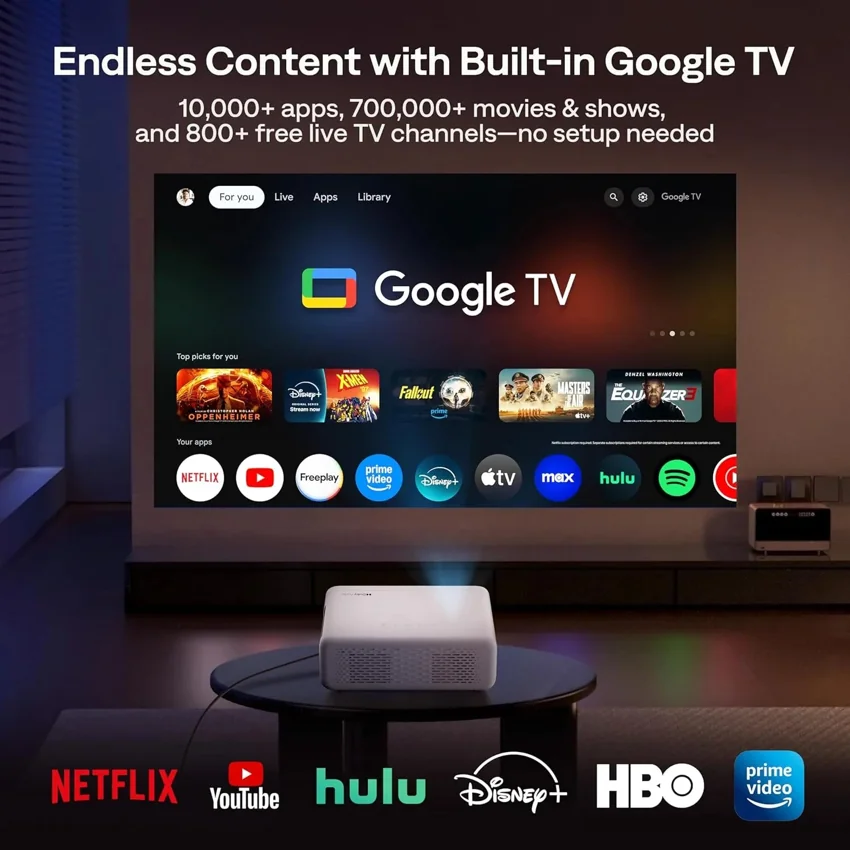
Yes. Google TV runs on the D1G itself, providing app access over Wi-Fi. Check the relevant streaming service for account and subscription requirements.
How much built-in speaker power does the EAZZE D1G have?
Aurzen lists two 8 W speakers with Dolby Audio. You can start with those speakers and decide whether external audio is useful once the projector is in its permanent position.

 Aurzen